
The Game That Made You Go Outside - Boktai: The Sun is in Your Hand
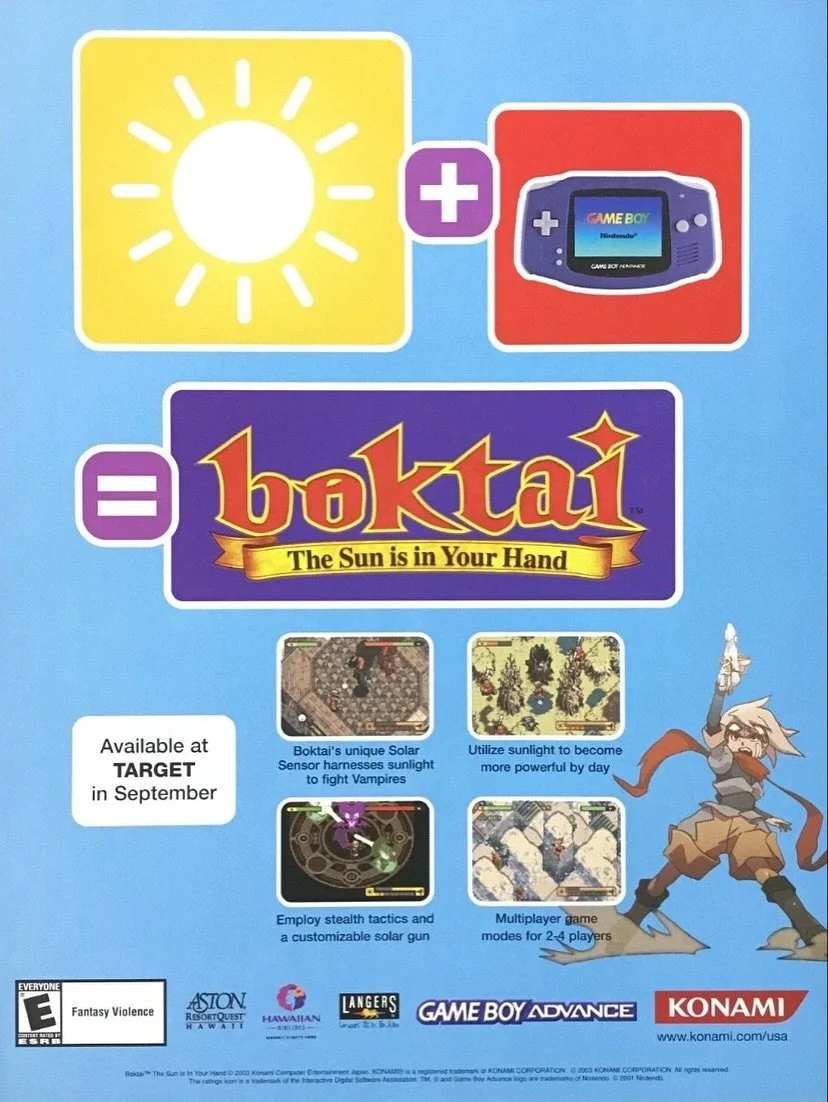
Before "go touch grass" was a meme, Hideo Kojima was literally engineering it into a Game Boy cartridge. In 2003, Konami released Boktai: The Sun Is in Your Hand for the Game Boy Advance, a game with an actual UV light sensor built into the cartridge that harnessed the power of the real sun as a core gameplay mechanic. No sun? No power. Simple as that. It's exactly the kind of wildly original idea you'd expect from the creator of Metal Gear Solid.
The Idea That Started Everything
By the early 2000s, Hideo Kojima was restless. He wanted to create something genuinely new, not just mechanically interesting, but conceptually unlike anything else on the market. The problem? He didn't have a single idea. So he did what any visionary does in a creative drought: he started wandering.
Kojima's search led him to the toy division of Konami, where hardware prototypes and gadgets were being developed. Standing among the toys and sensors, something clicked. What if a sensor, specifically a light sensor - could be embedded into a Game Boy cartridge? What if the game itself demanded players step outside and interact with the real world to progress?
From that single spark, Boktai was born; a game whose central mechanic was rooted not in fiction, but in physics.
Django & The Gun Del Sol
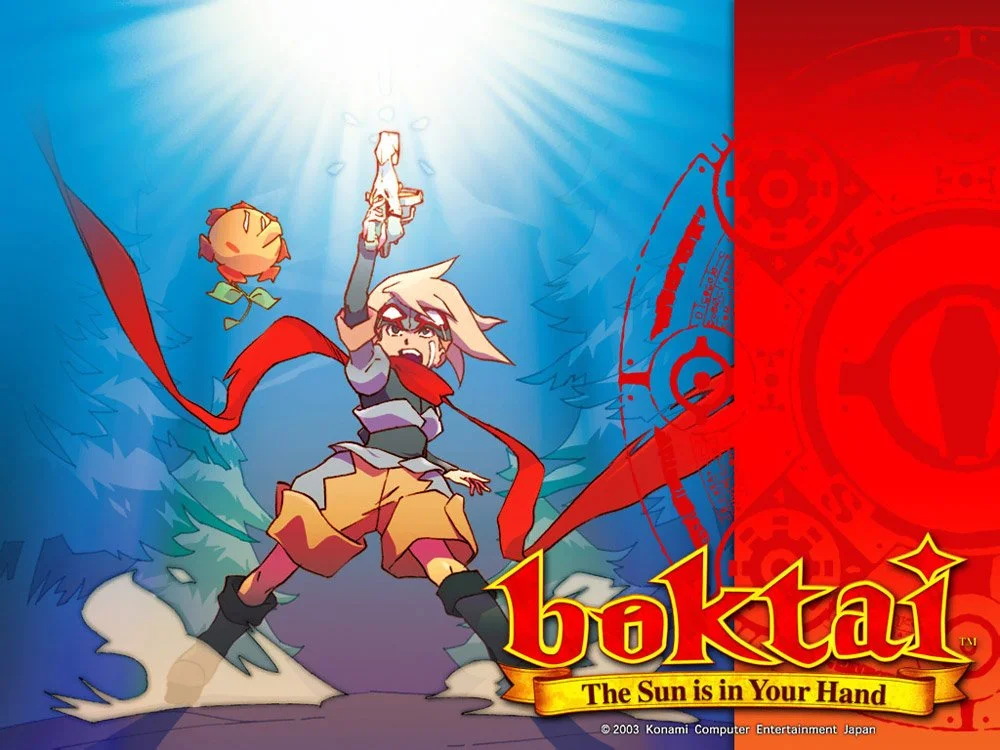
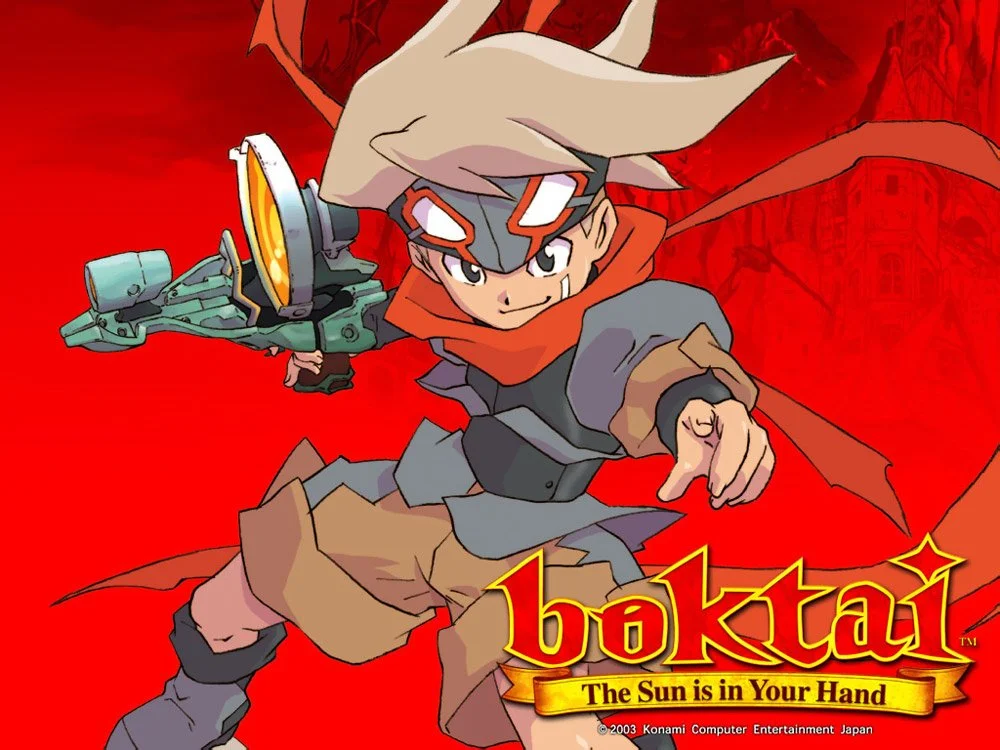
Players take on the role of Django, a young vampire hunter navigating a world overrun by the undead. His weapon of choice is the Gun Del Sol; a solar-powered firearm that fires concentrated bolts of sunlight at enemies. It's a clever thematic marriage: vampires die in sunlight, and your weapon literally IS sunlight.
To charge the Gun Del Sol, players needed to expose the cartridge's solar sensor to real sunlight. Step outside on a bright day and your weapon becomes devastating. Play indoors at night and you're working with whatever charge you've banked. The sun wasn't just flavor, it was a resource to be managed, strategized around, and respected.

Kojima Hands Off the Torch
While Kojima conceived Boktai and served as its primary story writer and designer, the demands of Metal Gear Solid 3: Snake Eater eventually pulled him away from day-to-day development. He transitioned into a producer role, handing the director's chair to Ikuya Nakamura - who carried the vision through to completion with the same creative commitment the project demanded.
Kojima's fingerprints remain all over the final product: the eccentric mechanic, the atmospheric world-building, the way the game seems to wink at you for being clever enough to play it on a sunny afternoon.
One of Boktai's most charming quirks is its Overheat system. If the solar sensor detects you've been baking in direct sunlight for too long, the game displays a flashing "OVERHEAT" warning above your solar gauge; essentially asking you to take a break. Ignore it long enough, and the game enforces consequences: depleted gauges, reduced effectiveness, or worse depending on the title. A video game that genuinely cares about your sunburn. Incredible.
Reception, Legacy & The Sequel
Boktai reviewed well enough to prove the concept had legs. Critics praised its unconventional design, with many pointing to it as a refreshing example of a developer genuinely swinging for something new. Despite its unabashedly gimmicky nature, people found it hard to fault Kojima for thinking outside the box. (RPGFan) Boktai reviewed fairly well, and while its annoyances became more famous than the game itself, it did well enough that a sequel was released in 2004. (Kotaku) That sequel: Boktai 2: Solar Boy Django, retained the solar sensor mechanic while expanding the RPG systems and shifting the gameplay toward melee combat. Kojima, who designed the first game, was not involved in Boktai 2's development. (Kotaku) The series would go on to spawn a third GBA entry, though the third game in the series did not receive a release outside of Japan. (Wikipedia) A fourth installment eventually arrived on the Nintendo DS under the rebranded title Lunar Knights, quietly dropping the solar sensor entirely and with it, much of what made the series so singular in the first place.
Why It Still Matters
Boktai arrived years before Pokémon GO normalized the idea of games that push players into the physical world. Its ambition was remarkable: a AAA handheld title that fundamentally changed based on where you were standing and what the weather was like outside. Cloudy days required strategy. Sunny afternoons became gaming sessions. The real world became part of the level design.
The series never achieved the mainstream breakout it deserved, but its influence quietly echoes through every location-aware, environment-reactive game that followed. Kojima didn't just make a game — he tried to dissolve the barrier between the screen and the street.
And for a generation of kids who dragged their GBAs outside claiming it was "for the game," he absolutely succeeded.