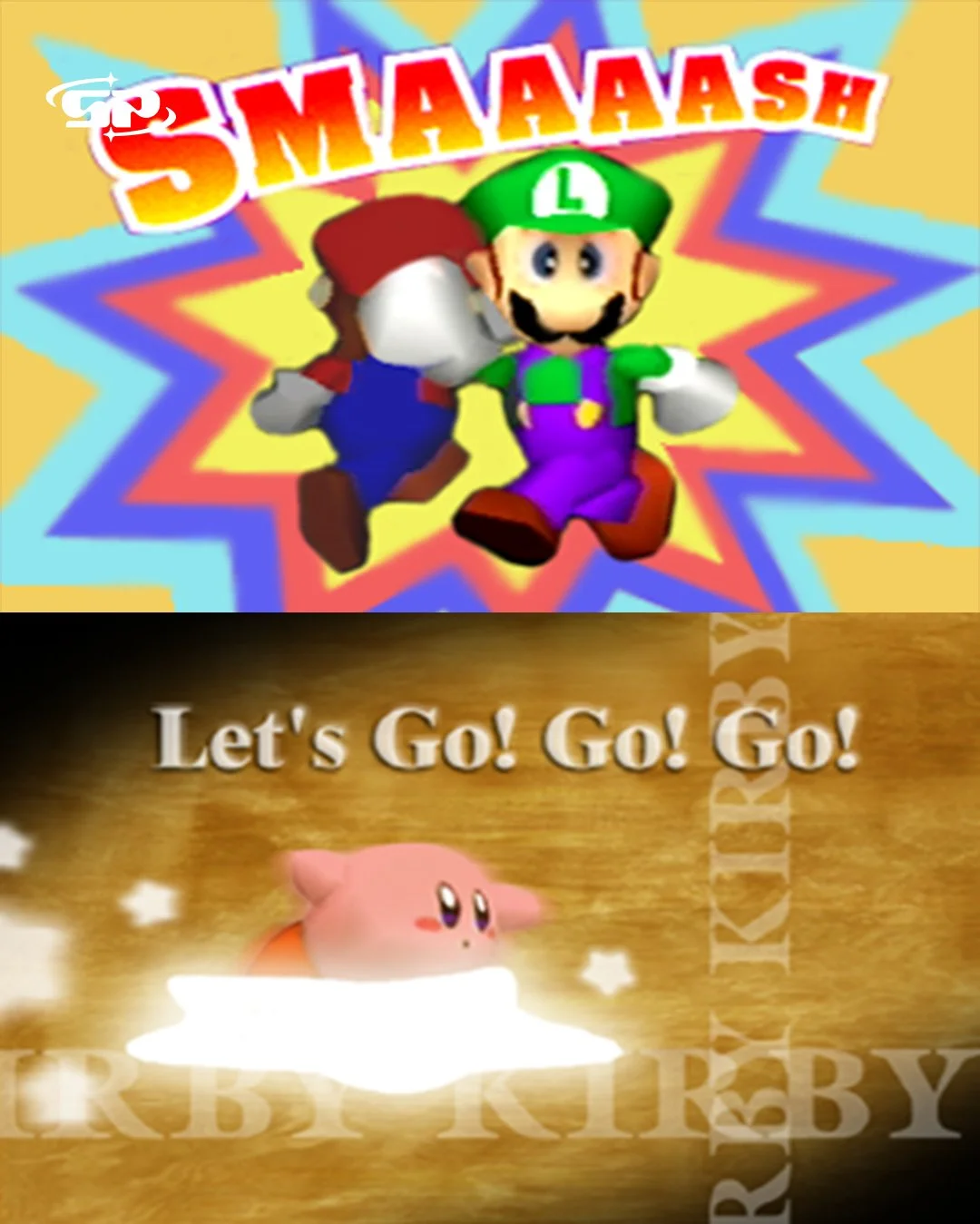
Sakurai has said he made Kirby’s ending screen in just under two hours. He was also directing the game at the time. The finished image has two KIRBY wordmarks crossing each other, built to echo the Super Smash Bros. logo.
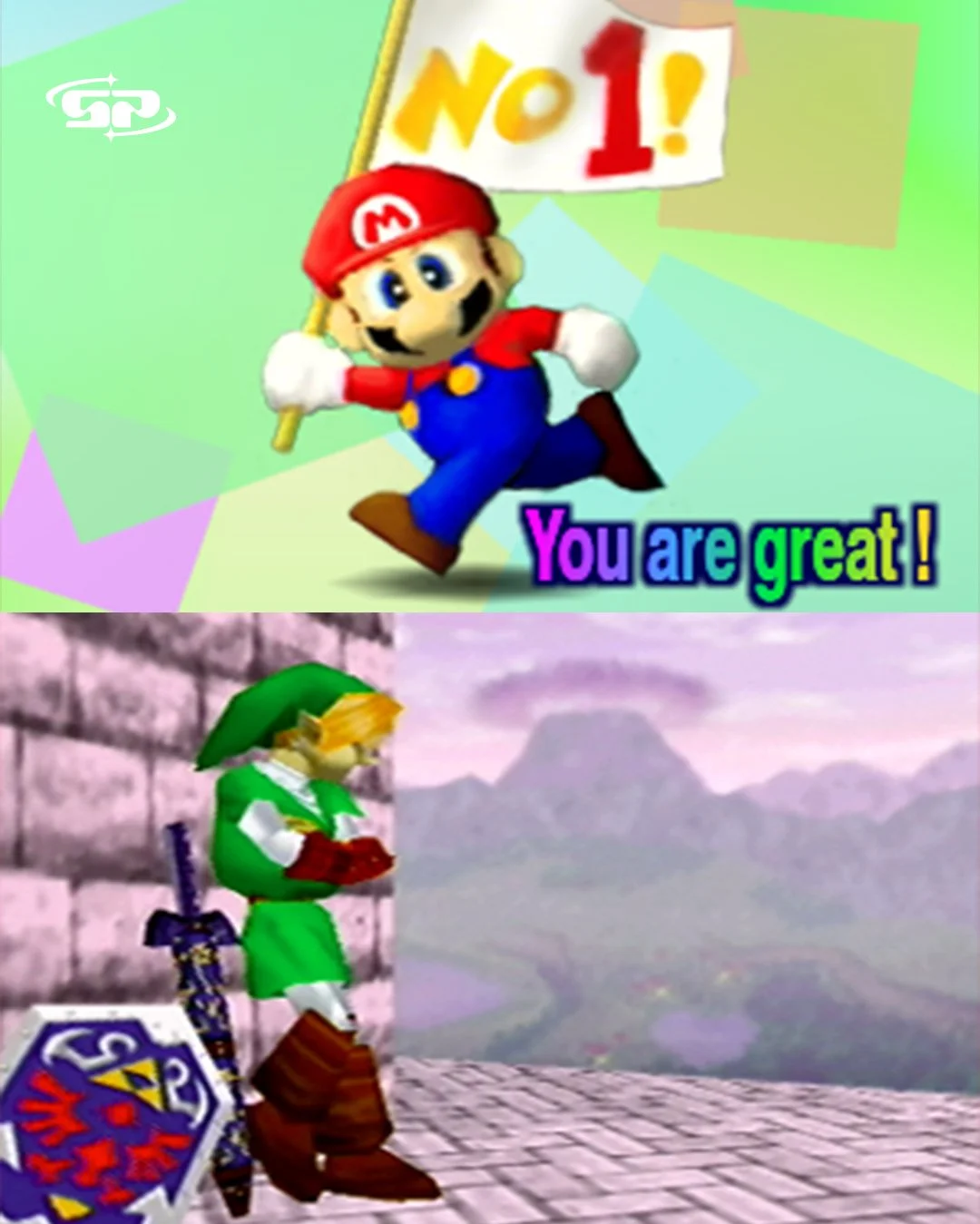
Clear the 1P Game in the original Super Smash Bros. and, after the credits roll, the game gives you one image tied to the character you beat it with. There are twelve of them, one per fighter. Melee replaced the idea with screenshots of the characters in gameplay, usually staged for a joke, and every Smash since has followed that approach. The N64 game is the only one in the series where these screens are original artwork.
They were drawn by eleven people. Nintendo’s Japanese Smash Bros. website ran a gallery of all twelve and credited each one, indirectly, to a member of the HAL Laboratory team. Matched against the game’s staff roll, most of the names belong to people with other jobs on the project. These were field designers, motion designers, and the person responsible for items. That’s why the set doesn’t look like a set. Each screen reflects one person’s idea of what a reward should look like, drawn in whatever style that person worked in.
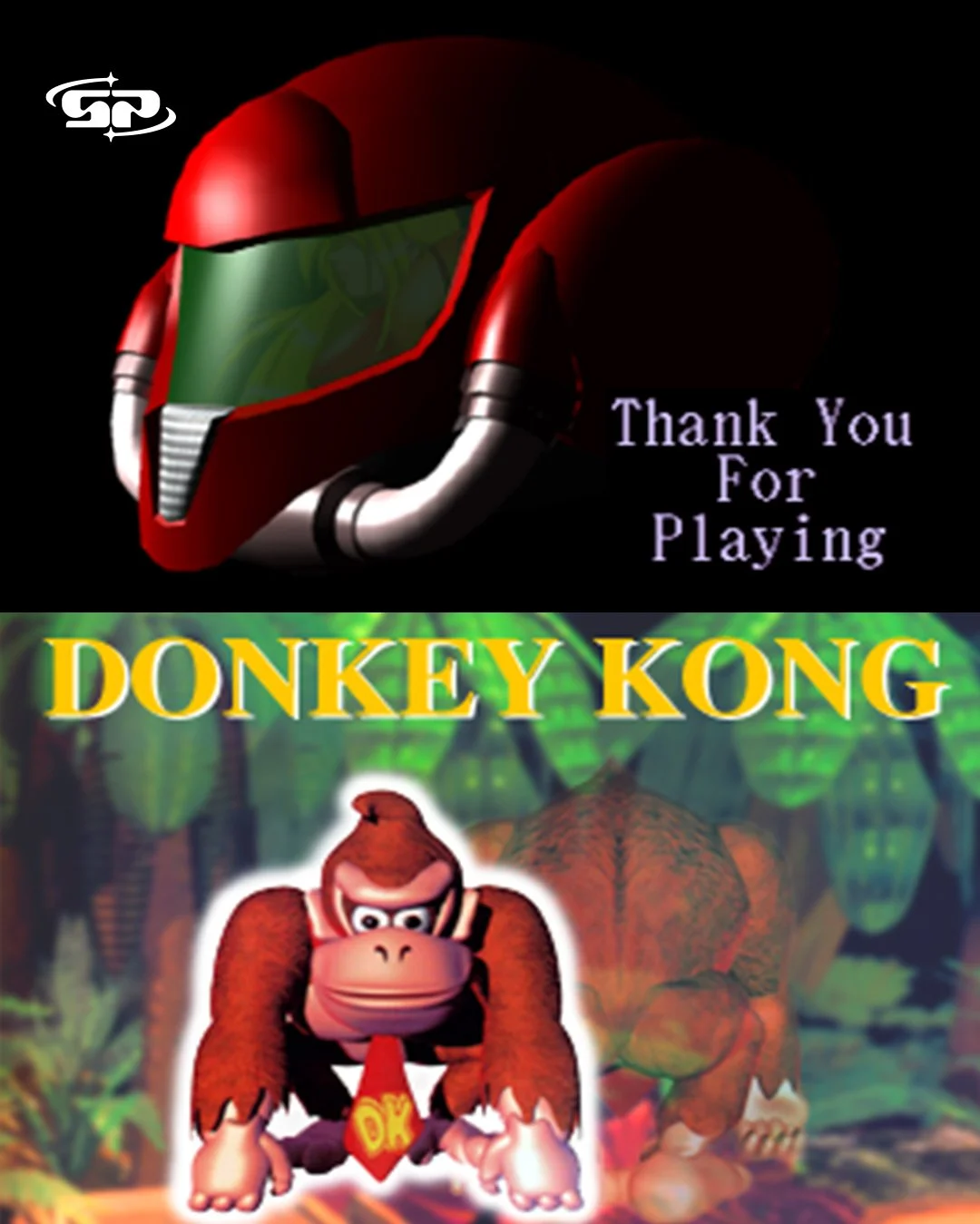
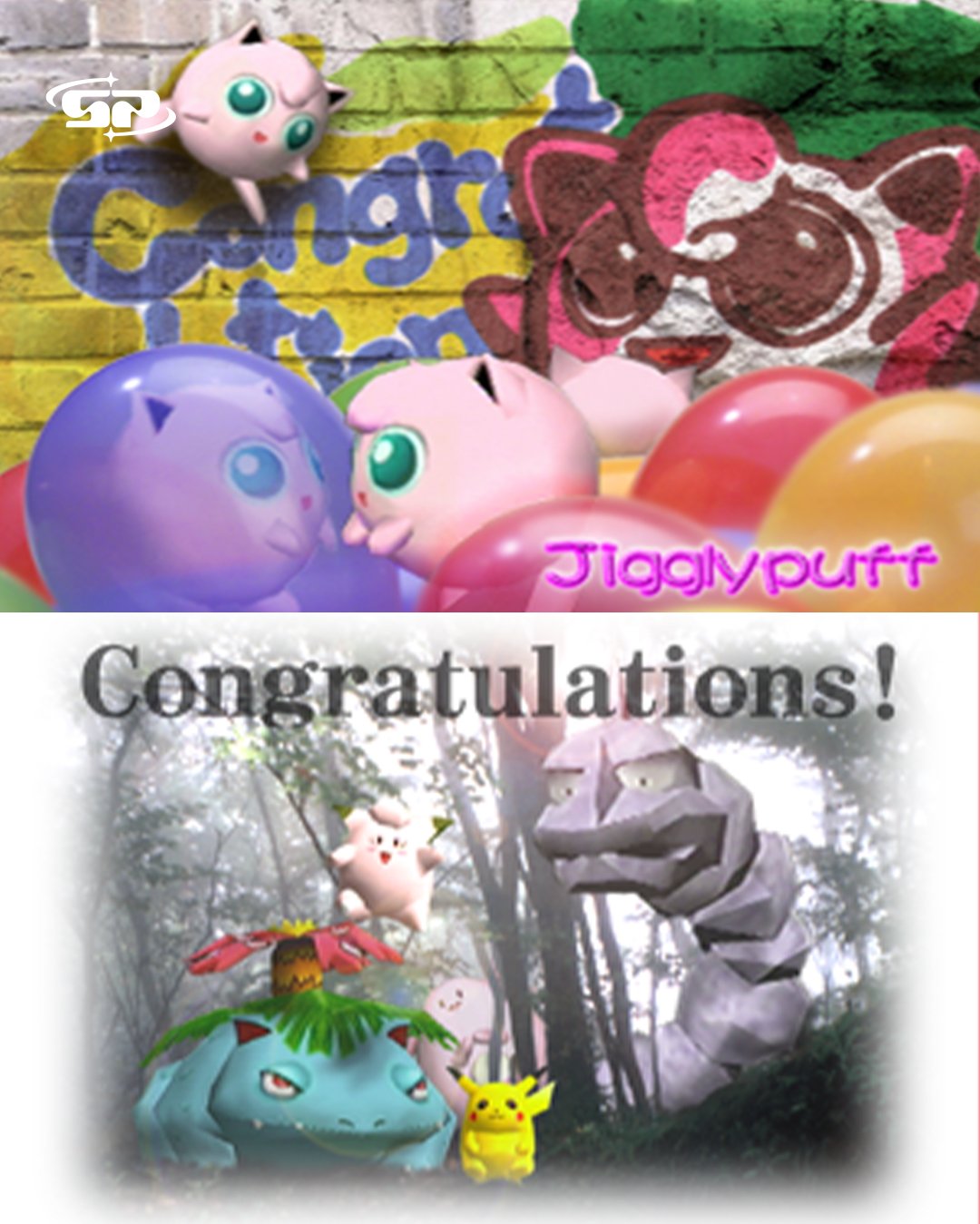
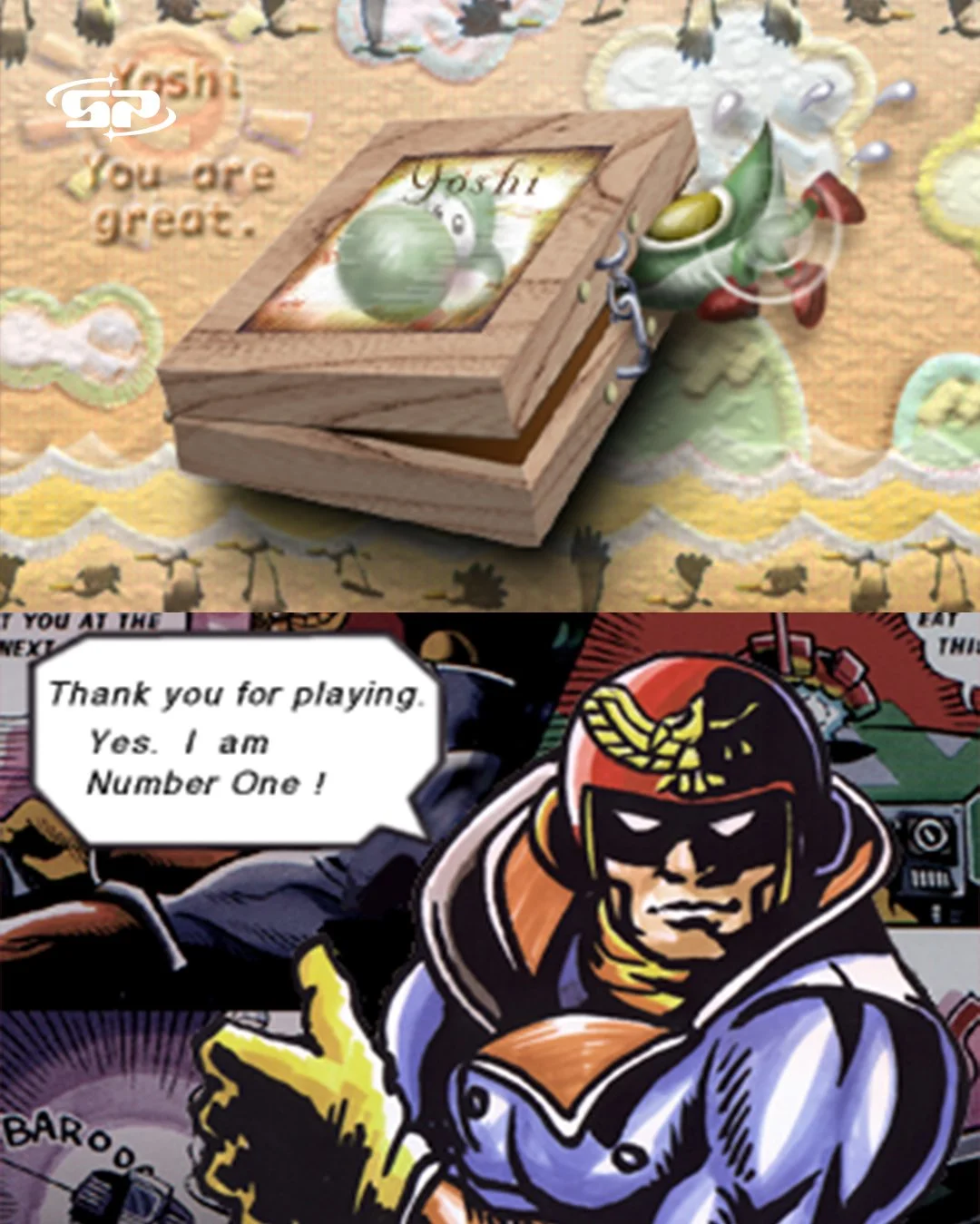
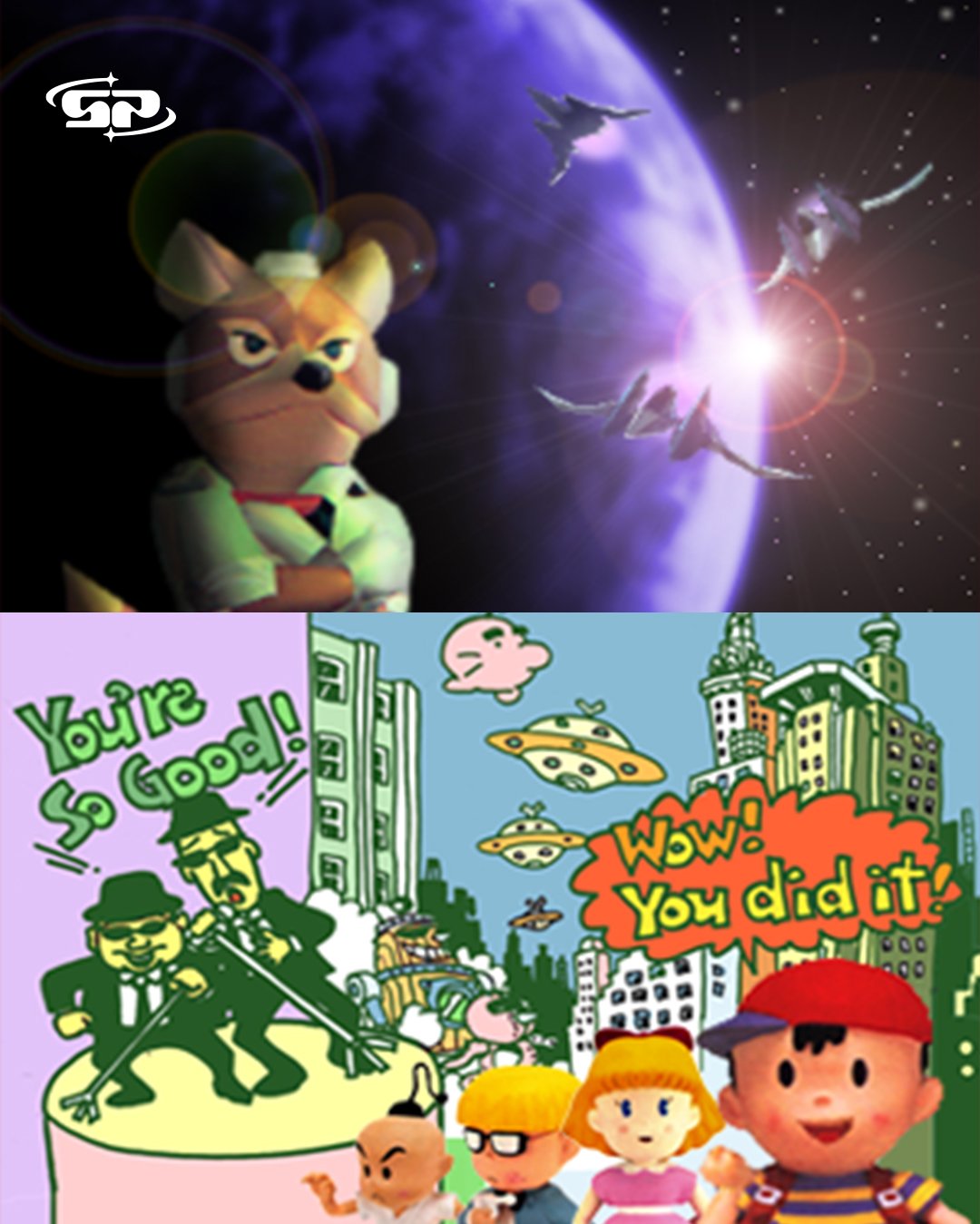
Fox’s screen came from the field designer, Tadashi Hashikura, and references the original North American Star Fox box art. Jigglypuff’s came from Satoko Nakamura, the item and effect designer, and plays on Jigglypuff being a Balloon Pokémon. Michiko Takahashi, who designed the select screen and maps, drew Yoshi’s as a book laid out like the Yoshi’s Island stage. It includes the lock that sits in that stage’s background and Goonie sprites pulled from Yoshi’s Story. Captain Falcon’s, from opening designer Kunio Watanabe, sits on comic panels lifted from the back of the Japanese F-Zero X box. Chief designer Tsuyoshi Wakayama reused the Donkey Kong Country renders for DK. Shigeru Hashiguchi, credited for accessories, put Pikachu alongside Venusaur, Clefairy, Onix and Chansey models taken straight from Pokémon Stadium.
The EarthBound screens go the furthest. Luigi’s, from motion and model designer Hitoshi Kikkawa, carries the SMAAAASH text that flashed on a critical hit in that game. Ness’s is credited to Ashura Benimaru of Creatures Inc. It reuses the original clay models made for EarthBound, puts the Runaway Five up front, and sets Fourside under attack by saucers modeled on the game’s opening. The Frankystein Mark II and an Ultimate Octobot are in the background.
Mario got the most unusual credit of all. His screen is attributed to a temp support designer listed only as Kita, a name that doesn’t appear anywhere in the game’s staff roll. He’s thought to be Kenichiro Kita, a HAL designer who went on to model characters for Melee.
Link’s screen, by model and motion designer Junsuke Sugiura, is one of only two with no text on it. Fox’s is the other.
Samus took two people, Sugiura and Hashiguchi. Look at her visor and there’s a drawing of her with the helmet off, a nod to the Metroid endings that reward a fast clear by taking the armor away.